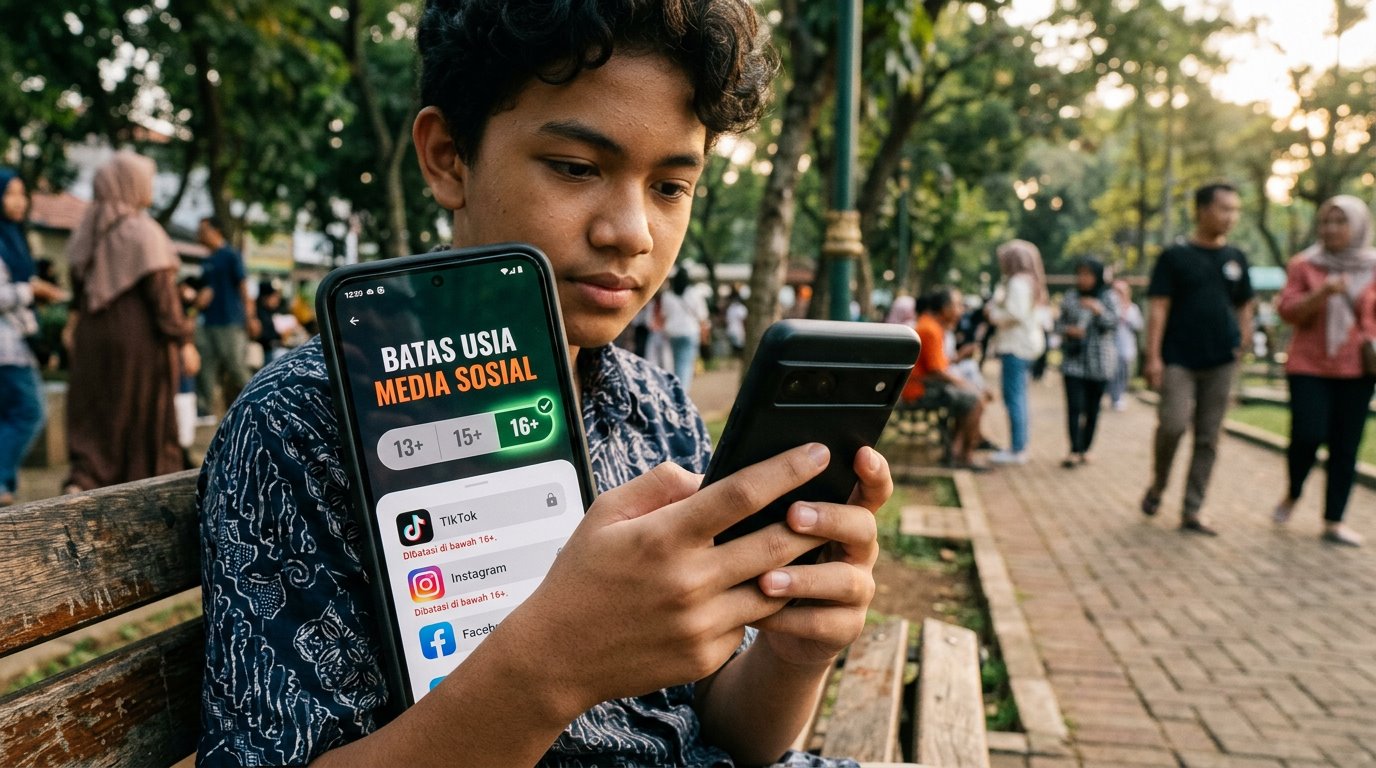

Approximately 299 million Indonesians are currently connected to the internet, and nearly 80% of the country’s children are active participants on various online platforms. However, recent government data referencing UNICEF reveals a troubling reality: roughly half of Indonesia’s children have encountered sexual content online, with 42% admitting the experience made them feel frightened or uncomfortable. To address these vulnerabilities, Indonesia is joining a growing list of nations, including Australia and its neighbor Malaysia, in passing laws to restrict social media access for minors.
Unlike the blanket ban recently introduced in Australia for those under 16, Indonesia is implementing a tiered age-gated approach. The Ministry of Communication and Digital Affairs stated that children aged 13 and older will be allowed to access platforms categorized as “lower-risk.” Meanwhile, platforms identified as “higher-risk” will be restricted to users who are at least 16 years old. This strategy aims to balance internet utility with the necessity of protecting younger users from content that is not age-appropriate.
The list of platforms deemed “higher-risk” is extensive and includes global giants such as YouTube, TikTok, Facebook, Instagram, Threads, and X, as well as Bigo Live and Roblox. Minister Meutya Hafid emphasized that these measures are intended to prevent risks ranging from harmful interactions with strangers to child exploitation and platform addiction. These regulations are scheduled to be signed into law on March 28, 2025, with full enforcement beginning one year later in March 2026.
The Indonesian government has clarified that the goal is not to block children from the internet entirely but to ensure they engage with it safely. Significantly, the regulation does not impose sanctions on children or parents; instead, it targets the digital platforms themselves for failing to meet protection obligations. This announcement follows a stern warning recently issued to Meta regarding its failure to curb online gambling and disinformation, signaling a broader crackdown on platform accountability within the region.
Indonesia’s shift toward a regulated digital landscape reflects a global trend seen in countries like Denmark, Spain, France, and the U.K., all of which are grappling with the impact of social media on youth. By placing the burden of enforcement on tech companies, Indonesia hopes to mitigate the psychological and physical risks associated with early social media exposure. As the 2026 deadline approaches, staying informed about these evolving compliance standards is vital for both businesses and families. Follow our platform for more insights into how global digital regulations are shaping the future of the internet.